SEM vs SEO is a common comparison for businesses looking to improve their search engine visibility, attract potential customers, and generate more leads or sales online. Although both strategies help websites reach people through search engines, they differ in how they generate traffic, how much investment they require, and how quickly businesses can see results.
SEO (Search Engine Optimization) focuses on improving a website’s organic rankings through content optimization, technical improvements, and authority building. SEM (Search Engine Marketing), commonly used to describe paid search advertising, helps businesses gain visibility through advertisements displayed in search engine results.
Choosing between SEM and SEO depends on your business goals, marketing budget, competition, and the timeframe in which you want to attract potential customers. Some businesses prioritize long-term organic growth, while others need immediate visibility through paid campaigns.
In this guide, we will compare SEM vs SEO in detail, including how they work, their differences, benefits, costs, limitations, performance metrics, and which strategy may be the right choice for your business.
What Is SEO (Search Engine Optimization)?
Search Engine Optimization (SEO) is the process of improving a website’s visibility in unpaid search engine results. It involves optimizing website content, technical performance, page structure, backlinks, and user experience so search engines can better understand the website and show its pages for relevant search queries. When someone searches for a product, service, or answer on Google, SEO helps a website compete for placement among organic results without paying Google for each click.
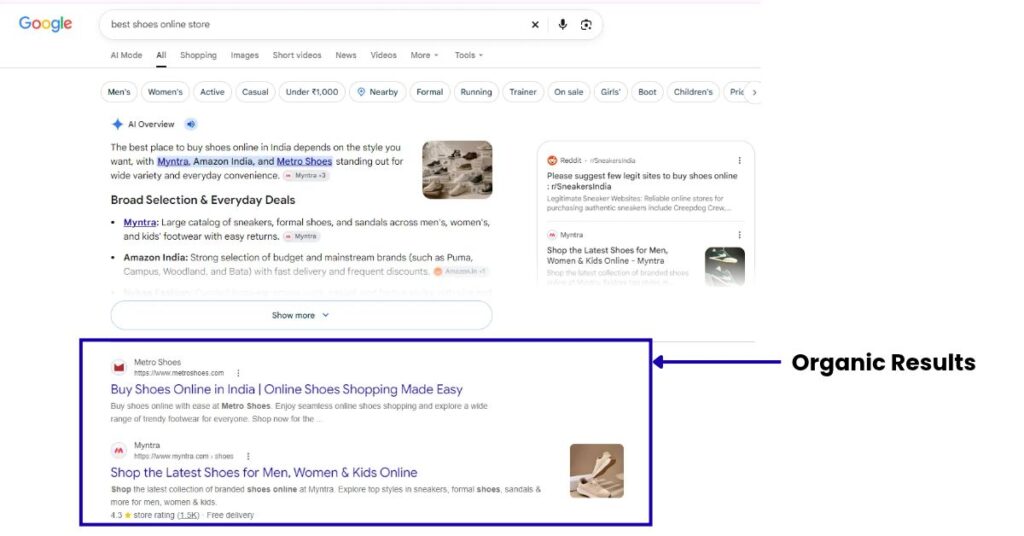
SEO is not limited to adding keywords to website content. It requires a combination of technical improvements, useful content, authority building, and a clear understanding of what users are searching for.
How Does SEO Work?
SEO works by helping search engines crawl, understand, index, and evaluate website pages to determine how relevant and useful they are for particular searches.
The main areas of SEO include:
1. On-Page SEO
On-page SEO involves optimizing the content and HTML elements of individual website pages. It helps search engines and users understand the topic, purpose, and relevance of a page.
Common on-page SEO activities include:
- Keyword research: Identifying the search terms potential customers use when looking for products, services, or information.
- Title tag optimization: Writing relevant and descriptive page titles that communicate the topic.
- Meta description optimization: Creating informative descriptions that encourage users to click on search results.
- Heading structure: Organizing content with appropriate H1, H2, and H3 headings.
- Content optimization: Providing relevant information, answering user questions, and covering the topic in sufficient depth.
- Internal linking: Connecting related pages to improve navigation and help search engines understand the website structure.
- Image optimization: Using descriptive filenames, appropriate alt text, and optimized image sizes.
On-page SEO helps align website content with search intent and makes individual pages more relevant to the searches they are targeting.
2. Technical SEO
Technical SEO focuses on improving the technical structure of a website so search engines can access, crawl, render, and index its pages efficiently.
Technical SEO activities may include:
- Fixing broken internal links and crawl errors.
- Improving page loading speed and Core Web Vitals.
- Creating and maintaining XML sitemaps.
- Reviewing robots.txt and crawl directives.
- Implementing canonical tags correctly.
- Fixing redirect chains and unnecessary redirects.
- Ensuring mobile-friendly website functionality.
- Implementing structured data where appropriate.
- Identifying duplicate or thin content.
- Improving HTTPS security and website accessibility.
A technically sound website makes it easier for search engines to access important pages and for visitors to navigate the website without unnecessary friction.
3. Off-Page SEO
Off-page SEO involves activities performed outside your website to improve its authority, reputation, and visibility.
Some common off-page SEO activities include:
- Building relevant backlinks from credible websites.
- Digital PR and media coverage.
- Creating useful resources that attract natural links.
- Brand mentions across relevant websites.
- Participating in relevant industry communities.
- Local business citations where applicable.
Backlinks can help search engines understand the relationships between websites and evaluate signals of credibility. However, link quality, relevance, editorial context, and natural link acquisition matter more than simply increasing the number of backlinks.
4. Content SEO
Content SEO focuses on creating, improving, and organizing content that satisfies the needs of people searching online.
A content SEO strategy may include:
- Blog articles and educational guides.
- Service pages.
- Product descriptions.
- Comparison articles.
- Frequently asked questions.
- Location – specific pages.
- Topic clusters and supporting content.
The goal is to provide useful content that addresses the user’s search intent, supports the website’s topical relevance, and helps visitors make informed decisions.
Benefits and Limitations of SEO
SEO helps businesses increase organic traffic, improve search visibility, and build trust. However, it takes time and requires ongoing effort.
| Benefits of SEO | Limitations of SEO |
|---|---|
| Improves organic search visibility | Takes time to show results |
| Generates consistent website traffic | High keyword competition |
| Builds trust and credibility | Rankings can fluctuate |
| Reduces paid advertising dependency | No guaranteed rankings |
| Helps generate leads and sales | Requires ongoing maintenance |
| Improves local search visibility | Requires consistent effort |
What Is SEM (Search Engine Marketing)?
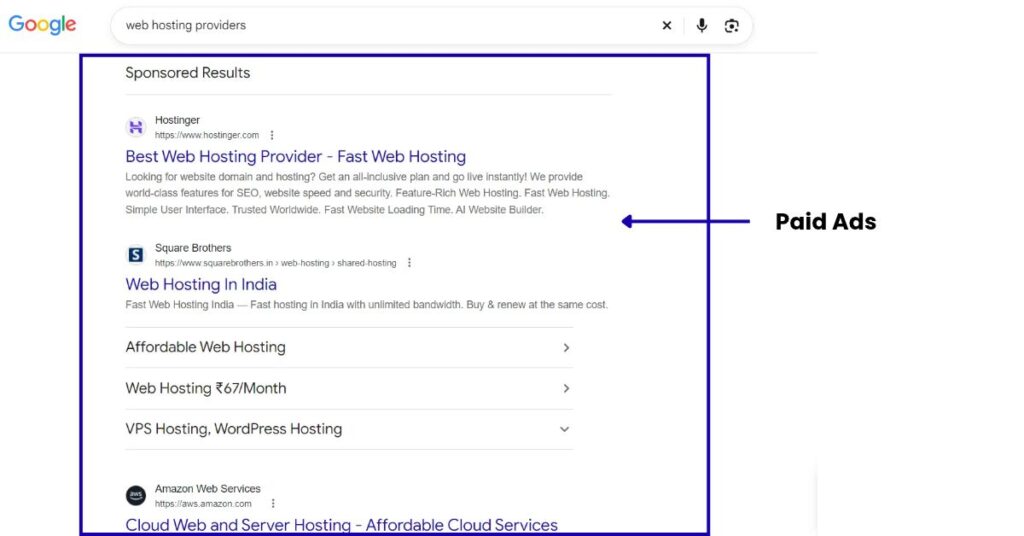
Businesses use SEM to reach users who are actively searching for products, services, solutions, or specific information. Unlike organic SEO, paid search advertising allows businesses to participate in ad auctions and potentially gain visibility without waiting for organic ranking improvements.
How Does SEM Work?
SEM generally works through an advertising platform where businesses create campaigns, choose targeting settings, select keywords, write ad copy, set budgets, and compete in advertising auctions.
For example, a business offering SEO services may create a paid search campaign targeting keywords such as:
- SEO services.
- SEO agency.
- SEO company near me.
- SEO services for small businesses.
- Professional SEO consultant.
When a user searches for a relevant query, the advertising platform evaluates eligible advertisements based on factors such as bid, ad quality, relevance, and other auction signals. The ads that win the auction may be displayed to the searcher.
1. Keyword Research and Targeting
Keyword targeting helps advertisers identify the search queries they want their ads to appear for.
SEM campaigns may use different keyword match types, including:
- Broad match: Can match searches related to the keyword based on Google’s matching system.
- Phrase match: Can match searches that include the meaning of the keyword or closely related intent.
- Exact match: Can match searches with the same meaning or intent as the keyword, including close variants.
Advertisers also use negative keywords to exclude irrelevant searches and reduce wasted advertising spend.
2. Creating Search Advertisements
Paid search ads are designed to attract users and encourage them to take an action.
A typical search ad may contain:
- Headlines.
- Descriptions.
- Display URL.
- Sitelink assets.
- Call assets.
- Other relevant ad assets.
Effective ad copy communicates what the business offers, highlights relevant benefits, and includes a clear call to action. The ad should match the search query and the landing page rather than making generic claims.
3. Setting Budgets and Bids
Advertisers determine how much they are willing to spend on their campaigns and select bidding strategies based on their goals.
Common bidding approaches include:
- Manual CPC, where advertisers control bids at the keyword or related level where supported.
- Maximize Clicks, which aims to generate clicks within the available budget.
- Maximize Conversions, which aims to generate conversions based on campaign settings and available data.
- Target CPA, which aims to optimize toward a specified cost per acquisition.
- Target ROAS, which aims to optimize toward a specified return on advertising spend.
The right bidding strategy depends on the campaign objective, available conversion data, budget, and business economics.
4. Landing Page Optimization
The landing page is where users arrive after clicking an advertisement. Its quality can influence the campaign’s performance and the likelihood of conversion.
A strong landing page should:
- Match the search query and advertisement.
- Clearly explain the product or service.
- Provide relevant information.
- Load quickly.
- Work properly on mobile devices.
- Include a visible call to action.
- Make contact or purchase steps easy.
- Build trust through relevant proof, reviews, or credentials.
Sending paid traffic to an irrelevant or poorly designed landing page can waste advertising spend, even when the campaign attracts the right audience.
5. Tracking and Optimizing Campaign Performance
SEM campaigns require ongoing monitoring and optimization. Advertisers review campaign data to understand which keywords, ads, audiences, and landing pages generate meaningful results.
Common SEM metrics include:
- Impressions.
- Clicks.
- Click-through rate (CTR).
- Cost per click (CPC).
- Conversion rate.
- Cost per conversion.
- Return on ad spend (ROAS).
- Quality Score diagnostics.
- Search terms report.
Regular optimization helps identify irrelevant search queries, inefficient spending, weak ad copy, poor landing pages, and opportunities to improve campaign performance.
Benefits and Limitations of SEM
| Benefits of SEM | Limitations of SEM |
|---|---|
| Provides quick visibility in search results. | Requires continuous advertising costs. |
| Targets relevant audiences. | Competitive keywords can be expensive. |
| Allows budget and bid control. | Traffic stops when ads are paused. |
| Provides measurable campaign results. | Paid clicks do not guarantee sales. |
| Promotes offers and new products quickly. | Requires regular campaign management. |
| Helps generate leads and sales. | Ad performance can decline over time. |
SEM vs SEO: What Is the Difference?
The main difference between SEM and SEO is how search visibility is achieved and how traffic is acquired.
SEO focuses on improving organic search visibility through content, technical optimization, website quality, and other organic ranking factors. SEM, when used to describe paid search advertising, focuses on promoting a website through advertisements that compete in search engine auctions.
Both strategies can target the same search queries, but their costs, timelines, management requirements, and traffic acquisition methods differ.
SEO vs SEM comparison table:
| Comparison | SEO | SEM (Paid Search) |
|---|---|---|
| Meaning | Search Engine Optimization | Search Engine Marketing, commonly used for paid search |
| Traffic Source | Organic search results | Paid search advertisements |
| Payment Model | No direct payment per organic click | Usually pay per click in standard search campaigns |
| Time to Results | Usually longer-term | Can start after approval and campaign launch |
| Budget | Content, technical work, SEO tools, specialists, and ongoing resources | Ad spend plus campaign management and landing page resources |
| Visibility | Depends on organic ranking and search engine systems | Depends on auction eligibility, bidding, relevance, and other factors |
| Traffic Continuity | Can continue without paying per click, but rankings may fluctuate | Paid traffic generally depends on active campaigns and budgets |
| Keyword Targeting | Content and page optimization around search intent | Keyword targeting, match types, negative keywords, and campaign settings |
| Control | Less direct control over ranking positions | More control over campaign targeting, budget, and advertising settings |
| Testing | Content and organic performance analysis | Ad, keyword, bidding, and landing page testing |
| Competition | Organic ranking competition | Advertising auction competition |
| Best Suited For | Sustainable organic visibility and long-term traffic development | Faster visibility, targeted promotions, and measurable paid campaigns |
SEO vs SEM: Which Is More Cost-Effective?
The cost-effectiveness of SEO and SEM depends on the business model, industry, competition, marketing budget, conversion rate, and customer lifetime value.
Neither strategy is automatically cheaper or more profitable for every business.
SEO Costs
SEO does not require businesses to pay search engines for each organic click, but it still requires investment.
SEO expenses may include:
- SEO agency or freelancer fees.
- In-house SEO team salaries.
- Content writing and editing.
- Technical website development.
- SEO tools and software.
- Link outreach and digital PR.
- Website maintenance and optimization.
The cost of SEO is generally associated with the work required to improve organic visibility rather than the number of visitors who click organic results.
If a page ranks well and continues attracting relevant traffic, the business may receive visitors without incurring an additional charge for every click. However, maintaining those results may require ongoing effort.
SEM Costs
SEM costs are generally associated with advertising clicks, campaign management, landing page development, and conversion tracking.
Paid search expenses may include:
- Google Ads or other search advertising budgets.
- CPC bidding costs.
- Agency or campaign management fees.
- Landing page design and development.
- Conversion tracking setup.
- Campaign testing and optimization.
For example, a business may spend money on paid search every month to generate traffic for a specific service. If it pauses the campaign, the paid traffic from those ads generally stops.
However, SEM can still be profitable if the campaign generates enough qualified leads or sales to justify the cost.
You Can Also Read : Search Engine Basics: How Search Engines Crawl, Index, and Rank Websites
How Long Does SEO Take Compared to SEM?
The time required to see results is one of the most important differences between SEO and SEM.
SEO Timeline
SEO usually requires time to produce meaningful results because search engines need to crawl, process, and evaluate pages, while websites also need to compete with existing pages.
SEO progress may depend on:
- Website history and authority.
- Technical issues.
- Content quality and relevance.
- Keyword competition.
- Search intent.
- Industry competition.
- Changes made to the website.
- Search engine updates.
Some SEO improvements may become visible sooner, while competitive keywords may take substantially longer to achieve meaningful rankings. SEO is best approached as an ongoing process rather than a one-time task.
SEM Timeline
SEM can provide visibility much sooner because businesses can launch campaigns after completing setup and receiving ad approval.
The process generally involves:
- Researching keywords and search intent.
- Setting up campaign structure and targeting.
- Writing advertisements.
- Creating or improving landing pages.
- Setting budgets and bidding strategies.
- Configuring conversion tracking.
- Launching the campaign after approval.
- Monitoring and optimizing campaign performance.
Although advertisements may begin generating clicks quickly, achieving profitable conversions may still require testing, optimization, and time to collect reliable data.
SEO vs SEM: Time to Visibility
SEO
Long-term
SEM
Short-term
SEM can deliver quicker visibility, while SEO aims to develop organic search performance over time.
When Should a Business Choose SEO?
SEO is a suitable choice for businesses that want to develop organic visibility, attract relevant visitors, and build a stronger presence in search engines over time.
SEO may be particularly useful when:
- Your business wants to attract organic traffic consistently.
- You want to rank for informational, commercial, and transactional keywords.
- Your website has valuable content that needs better visibility.
- You want to improve your website’s technical structure and user experience.
- Your business operates in a competitive market and needs a long-term strategy.
- You want to build visibility for service pages, product pages, and blog content.
- You want to strengthen your website’s authority and topical relevance.
- Your business wants to reduce its reliance on paid traffic over time.
Businesses That Can Benefit From SEO
SEO can support a wide range of businesses, including:
- Local service providers.
- E-commerce stores.
- Healthcare and wellness businesses.
- Professional service companies.
- Educational businesses.
- SaaS companies.
- Travel and hospitality businesses.
- B2B companies.
For example, a local dental clinic may optimize service pages for searches related to dental treatments in its service area. An e-commerce store may improve product pages, category pages, and buying guides to attract users researching or purchasing products.
When Should a Business Choose SEM?
SEM is a suitable choice for businesses that need faster search visibility, want to promote specific services or products, or need a measurable paid traffic channel.
SEM may be particularly useful when:
- You want to generate leads quickly.
- You are launching a new business or website.
- You need to promote a specific product or service.
- You want to test whether a keyword generates commercial leads.
- You have a defined advertising budget.
- You want to promote seasonal offers or limited-time deals.
- You want to target specific locations.
- You need to test landing page messaging.
- You want to increase visibility for competitive commercial keywords.
Businesses That Can Benefit From SEM
SEM can be useful for:
- Businesses offering high-value services.
- E-commerce brands.
- Local businesses.
- Event companies.
- SaaS providers.
- Real estate businesses.
- B2B service providers.
- Businesses launching new products.
For example, a moving company may run paid search campaigns targeting customers searching for moving services in a particular city. The campaign can direct users to a landing page with pricing information, service details, and a quote request form.
You Can Also Read : The SEO Impact of Google Removing Right-Side Ads from SERPs
How to Measure SEO and SEM Performance
Measuring performance is essential for understanding whether your search marketing strategy is generating meaningful business results.
SEO and SEM require different metrics because they involve different traffic acquisition methods, but both should ultimately be evaluated against business goals.
SEO Performance Metrics
| Metric | What It Measures |
|---|---|
| Organic Clicks | Visitors clicking organic search results |
| Organic Impressions | How often website pages appear in organic search results |
| Organic CTR | Percentage of organic impressions that generate clicks |
| Keyword Rankings | Position of pages for tracked search queries |
| Organic Conversions | Leads, purchases, bookings, or other actions from organic traffic |
| Referring Domains | Websites linking to your website |
| Core Web Vitals | Signals related to loading, interactivity, and visual stability |
| Indexed Pages | Pages included in search engine indexes |
| Organic Revenue | Revenue attributed to organic search where tracking is available |
SEM Performance Metrics
| Metric | What It Measures |
|---|---|
| Impressions | How often advertisements are shown |
| Clicks | Number of ad clicks |
| CTR | Percentage of ad impressions that generate clicks |
| CPC | Average cost per click |
| Conversion Rate | Percentage of clicks that generate conversions |
| CPA | Cost per acquisition or conversion, depending on the measurement definition |
| ROAS | Revenue attributed to advertising divided by advertising spend |
| Quality Score | Google’s diagnostic measure of keyword-level ad quality, based on expected CTR, ad relevance, and landing page experience |
| Search Terms | Queries that triggered advertisements |
You Can Also Read : AEO vs GEO vs SEO: Differences, Examples & How to Optimize for All 3
Final Thoughts: SEM vs SEO, Which Strategy Should You Choose?
SEO and SEM are two valuable approaches to search marketing, but they serve different purposes. SEO focuses on building organic search visibility through content, technical improvements, and website authority, while SEM, when used to describe paid search, helps businesses gain visibility through advertisements.
If your goal is long-term organic traffic, SEO is a strong investment. If your goal is faster search visibility and targeted advertising, SEM may be the right approach.
For businesses that have the budget and resources, combining SEO and SEM can provide a more balanced search marketing strategy. Paid campaigns can support short-term traffic and keyword testing, while SEO helps develop organic visibility and reduce dependence on paid traffic over time.
The best strategy is not simply the one that generates the most clicks. It is the one that attracts the right audience, supports your business objectives, and produces measurable results.
If you want to improve your website’s search visibility, generate more qualified leads, or develop a search marketing strategy, investing in the right combination of SEO and SEM can help your business compete more effectively online.
Frequently Asked Questions (FAQs)
The main difference is that SEO focuses on improving organic search visibility, while SEM is commonly used to describe paid search advertising. SEO does not involve paying search engines for each organic click, whereas paid search campaigns typically involve advertising costs for clicks.
SEM involves direct advertising costs, often based on clicks, along with campaign management expenses. SEO does not require payment per organic click, but it involves costs for content, technical optimization, tools, and professional services. The overall cost depends on the market and the strategy.
Yes. SEO can generate traffic through organic search results without businesses paying search engines for each click. However, achieving and maintaining organic visibility requires ongoing optimization, content development, and website maintenance.
SEM can generate traffic relatively quickly once campaigns are configured, approved, and eligible to serve. However, generating profitable leads or sales may require additional testing and optimization.
In broader marketing terminology, SEM may include both SEO and paid search marketing. However, many digital marketing professionals use SEM specifically to refer to paid search advertising, while SEO refers to organic search optimization.
Yes, both strategies can target the same search queries. SEO uses content and website optimization to compete for organic rankings, while SEM uses paid advertisements to compete for visibility through advertising auctions.
Yes. Small businesses can use SEO to develop organic visibility over time and SEM to promote specific services, generate leads, or reach customers more quickly. The combination depends on their budget, competition, and business goals.
Both can generate leads. SEO can attract leads through relevant organic content and service pages, while SEM can target commercial search queries through paid advertisements. Lead quality, conversion rate, and cost per lead should be used to evaluate which strategy is more effective.
A new website may benefit from both strategies. SEM can help generate initial visibility and test commercial keywords, while SEO helps build the technical foundation, content, and organic visibility needed for long-term growth. The initial investment should depend on the available budget and business priorities.