Businesses are always looking for better ways to reach customers, manage daily operations, and improve their productivity. As companies grow, these responsibilities become more demanding. A small team that once managed everything easily may eventually struggle with customer enquiries, marketing activities, sales, research, and other business tasks.
Artificial intelligence is becoming a useful part of solving these challenges. It helps businesses organise information, prepare content, answer questions, and reduce the time spent on repetitive work.
But AI is no longer limited to writing emails or generating blog posts. Businesses can now use ChatGPT to understand customer interests, improve how their products and services are presented, and create new ways for potential customers to interact with them.
OpenAI is taking this further with its introduction of Businesses in ChatGPT, announced on November 10, 2026. This initiative gives businesses new ways to manage their information, understand customer engagement, and connect with potential customers through Business Agents.
So, what is ChatGPT Business, how does it help growing companies, and what opportunities does it create for businesses?
Let’s look at everything in detail.
What Is ChatGPT Business?
The term ChatGPT Business can refer to OpenAI’s business-focused ChatGPT subscription, while its newer Businesses in ChatGPT initiative introduces tools that help companies connect with customers through ChatGPT.
These are two different offerings, but both are designed to make AI more useful in a business environment.
The ChatGPT Business subscription provides companies with a shared workspace where employees can use AI for their daily responsibilities. It includes team management, centralised billing, administrative controls, and business-focused data protection.
On the other hand, Businesses in ChatGPT focuses on how companies can present themselves to people who use ChatGPT to research products, compare services, and make purchasing decisions.
Through this newer initiative, businesses can claim their profiles, update important information, access aggregated engagement insights, and, if eligible, launch their own Business Agents.
For example, imagine a company that sells office furniture online.
A potential customer might ask ChatGPT to recommend an office chair for long working hours. ChatGPT may help the customer compare suitable options. If the company has a verified business profile and is eligible for a Business Agent, the customer may also be able to visit its profile and ask questions directly through that agent.
This creates another opportunity for businesses to connect with people who are already interested in their products or services.
Understanding Businesses in ChatGPT: Three Important Features
OpenAI’s November 10 announcement introduces three major parts of this initiative: Business Hub, business engagement insights, and Business Agents.
1. Business Hub: A Place to Manage Your Business Information
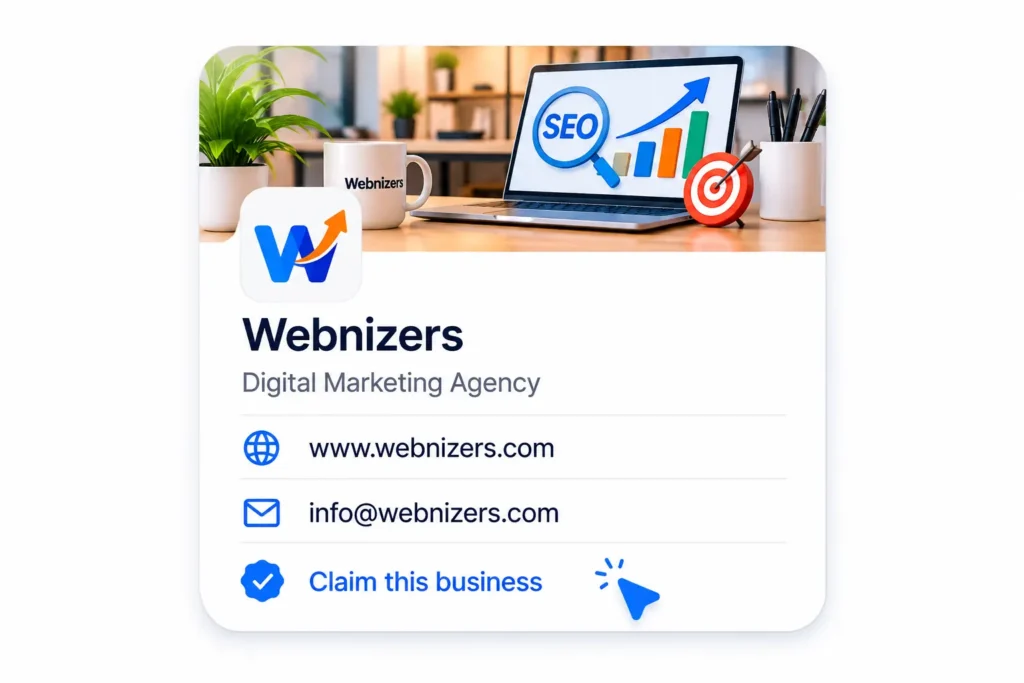
Business Hub is where eligible companies can claim and manage their business presence in ChatGPT.
When a business claims its organization and completes verification, it can update important details and provide additional information about its products or services.
This is important because customers need accurate information when researching a company.
For example, if someone is looking for a company that provides home cleaning services, they may want to know:
- What services does the company offer?
- Which areas does it serve?
- What are its prices?
- How can customers contact the business?
- Does it offer any additional services?
Businesses can use Business Hub to maintain relevant information and help ChatGPT present more accurate details.
Another useful feature is the ability to add self-service product feeds containing pricing and availability information. This helps businesses provide up-to-date product details.
Eligible Shopify merchants can also connect their stores through Business Hub or Shopify admin to simplify verification. Eligible Shopify products are already integrated through Shopify Catalog.
Why does this matter?
Previously, businesses mainly focused on maintaining their information across search engines, directories, and their own websites. Now, they also have an opportunity to manage their business information through a dedicated ChatGPT platform.
2. Business Insights: Understand How Customers Find Your Business
Having a business presence is useful, but understanding how people interact with it is equally important.
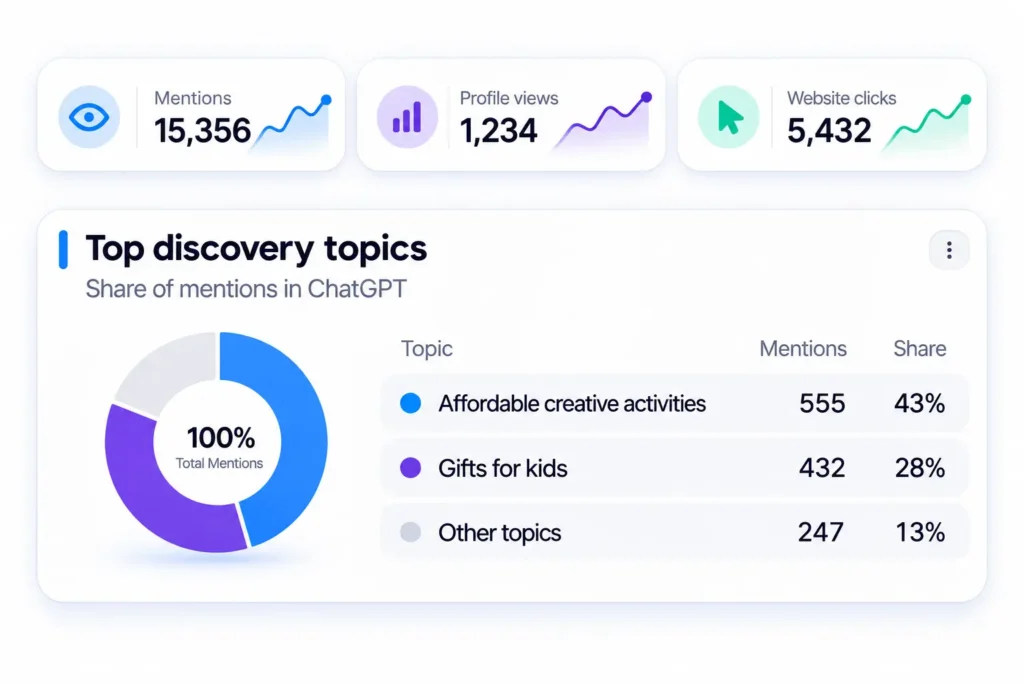
Business Hub provides aggregated insights that help companies understand how they are being discovered through ChatGPT.
Businesses can see information such as:
- Business mentions: How often a business is mentioned in ChatGPT.
- Website clicks: How many clicks its website receives.
- Profile views: How many people view its business profile.
- Discovery topics: Common themes across conversations where the business website is cited.
Consider an online store that sells skincare products.
The business may discover that its website is frequently cited in connection with skincare routines, moisturisers, and products for dry skin.
These insights can help the company understand which subjects are associated with its business and identify areas where its website information could be improved.
For example, if customers are interested in a particular product category, the company may want to provide clearer product descriptions, answer common questions, or update its product information.
There is also an important privacy consideration. OpenAI does not share individual users’ conversations or Business Agent chats with businesses. The insights are aggregated and only become available when sufficient interactions meet certain thresholds.
This means businesses can understand general engagement patterns without receiving private customer conversations.
3. Business Agents: A New Way to Interact With Customers
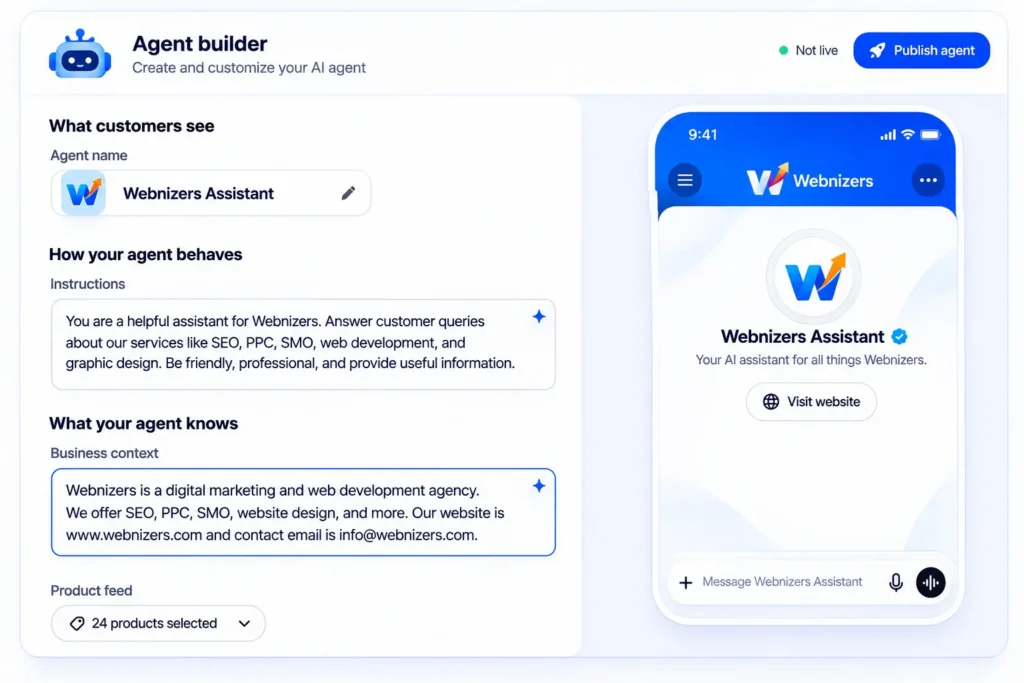
Business Agents are another important part of the announcement.
They allow eligible organisations to build, test, and launch AI agents that can answer questions about their products and services.
Think about a customer who wants to purchase a laptop but is unsure which model is suitable.
Instead of visiting several product pages and reading all the specifications, the customer may be able to interact with a business’s Business Agent.
They could ask:
- Which laptop is suitable for office work?
- What is the difference between these two models?
- Which model offers better battery life?
- What features are included?
- Which option would suit my requirements?
The Business Agent can help answer these questions using the business’s information.
This creates a more interactive way for customers to understand what a company offers.
Business Agents are currently available to eligible ecommerce and online service businesses in the United States. They are not yet available to every business or in every market.
Businesses can also sponsor their Business Agents and use them as destinations for ChatGPT Ads. Sponsored placements are clearly labelled and remain separate from ChatGPT’s independent responses.
Get Your Business Listed on ChatGPT
Help potential customers find your business when searching for relevant products and services on ChatGPT. Get your business listing started with our expert assistance.
How Can ChatGPT Business Help Growing Businesses?
The biggest opportunity is not simply having an AI tool available. It is finding practical ways to use it to improve how a company operates and connects with customers.
Here are some ways growing businesses can benefit from ChatGPT and the new Businesses in ChatGPT platform.
1. Improve Business Visibility in AI Search
People are increasingly using ChatGPT to find information, compare products, and get recommendations.
For example, someone might ask:
- Which digital marketing agency provides SEO services in London?
- What are the best accounting software options for small businesses?
- Where can I buy an affordable electric bicycle?
- Which company provides reliable website development services?
These types of questions create opportunities for businesses to appear in relevant ChatGPT responses.
Businesses can improve their chances of being understood by providing clear information about their services, products, locations, pricing, and expertise.
Business Hub adds another opportunity by allowing eligible companies to claim and manage their business information.
However, claiming a business profile does not guarantee that ChatGPT will recommend or mention that business in every relevant response. The information available, the user’s question, and the system’s selection all matter.
2. Help Customers Make Better Purchasing Decisions
Customers often have questions before buying a product or hiring a service.
They may want to compare different options, understand product specifications, check availability, or find out whether a service meets their requirements.
Business Agents can help companies provide information during this decision-making process.
For example, an online furniture store could help customers understand the differences between office chairs, desks, and storage products.
A customer could explain their requirements, and the Business Agent could help them review suitable options using the company’s product information.
This can make the buying process easier because customers have another way to get answers without searching through multiple pages.
3. Generate More Opportunities for Customer Engagement
A business website is an important place where potential customers learn about a company. However, not every visitor finds the information they need immediately.
Some visitors may leave because they cannot find product details, understand service options, or get answers to their questions.
Business Agents introduce another way for customers to interact with a company.
Instead of simply viewing a business profile, eligible customers can start a conversation with its Business Agent and ask follow-up questions.
For example, someone looking for website development services may ask about available packages, the development process, expected timelines, and included features.
A Business Agent can help explain these offerings using the information provided by the company.
This creates an additional opportunity to keep interested customers engaged.
4. Understand What Potential Customers Are Looking For
One of the most useful parts of Business Hub is its discovery topics feature.
Businesses can see common themes across conversations where their website is cited. These insights can help companies understand the subjects associated with their products and services.
Let’s take an example of a company offering digital marketing services.
Its discovery topics might include:
- Local SEO services.
- Website optimisation.
- Social media marketing.
- Link building.
- PPC advertising.
This information can help the company understand which areas are relevant to its visibility on ChatGPT.
The marketing team can use these insights to review existing website pages, identify missing information, and prepare content that answers common customer questions.
It is important to understand that discovery topics are aggregated themes, not a list of individual customer searches or private conversations.
5. Support Marketing Teams With Content Creation
The ChatGPT Business subscription can also help internal marketing teams with regular content requirements.
Marketing departments often need to prepare different types of content for websites, social media, advertisements, email campaigns, and other platforms.
ChatGPT can help with the initial work, including:
- Generating blog topic ideas.
- Preparing article outlines.
- Writing social media drafts.
- Creating email campaign ideas.
- Preparing website content.
- Suggesting advertisement headlines.
- Organising content calendars.
- Creating frequently asked questions.
For example, a company launching a new service can use ChatGPT to prepare an initial marketing content plan.
The team can then review the suggestions, add accurate business information, and make sure the content matches its brand voice.
This can reduce the time required to prepare the first draft and help marketing teams maintain a regular publishing schedule.
6. Make Customer Support More Efficient
Customer support becomes more challenging as a company receives more enquiries.
Customers may ask similar questions about pricing, delivery, returns, service availability, and product specifications.
Businesses can use ChatGPT to prepare support documents, organise frequently asked questions, and draft responses.
Business Agents offer an additional customer interaction opportunity for eligible companies.
For example, an online store can provide its Business Agent with relevant product information so customers can ask questions about available products.
This does not mean every customer support responsibility can be automated. Complicated complaints, payment disputes, sensitive requests, and situations requiring human judgement should still be handled by the appropriate employees.
7. Help Sales Teams Explain Products and Services
Sales teams need to understand customer requirements before recommending a suitable product or service.
Sometimes, potential customers are interested in an offering but do not fully understand its features or benefits.
A Business Agent can help explain available options and answer product-related questions.
For example, a software company could use its Business Agent to explain the differences between its subscription packages.
Customers could ask which package includes particular features or which option is suitable for a small team.
This gives interested customers another way to understand the company’s offerings before contacting its sales department.
8. Support Business Growth Without Increasing Every Operational Cost
When a company grows, it usually needs additional resources to manage its increasing workload.
More customers can mean more enquiries, more product questions, additional marketing requirements, and greater demand for customer support.
AI tools can help businesses manage some of this workload more efficiently.
For example, a small ecommerce company may not have a large customer support department. ChatGPT can help its employees prepare responses, organise product information, and handle repetitive writing tasks.
If the business is eligible for a Business Agent, it can also introduce an additional way for customers to ask questions about its products.
The objective is not to replace employees but to help existing teams manage their responsibilities more effectively.
You Can Also Read : Search Engine Basics: How Search Engines Crawl, Index, and Rank Websites
Practical Examples: How Different Businesses Can Use ChatGPT
The benefits of ChatGPT can vary depending on the industry and the type of customers a company serves.
Here are some examples of how different businesses can use these capabilities.
1. Ecommerce Businesses
Online stores can provide product feeds with pricing and availability information. Eligible businesses can also use Business Agents to answer questions about product features, compare options, and help customers understand their choices.
2. Digital Marketing Agencies
Agencies can use ChatGPT for content planning, marketing research, client communication, and reporting. They can also review Business Hub insights to understand topics associated with their website.
3. Software Companies
Software businesses can use ChatGPT to explain product features, prepare documentation, and support sales activities. Eligible online service companies may also use Business Agents to answer questions about their services.
4. Local Service Businesses
Cleaning companies, repair services, and other local providers can maintain accurate business details and service descriptions. This helps provide useful information when people are researching local services.
5. Education and Training Companies
Training providers can use ChatGPT to prepare course descriptions, answer common questions, create learning materials, and organise information about their programmes.
You Can Also Read : What Are White Label SEO Services and How Do They Work?
How to List Your Business on ChatGPT: Step-by-Step Guide
If you want your business to appear in ChatGPT and manage how its information is presented, you can start by checking OpenAI’s Business Hub.
OpenAI introduced Businesses in ChatGPT on November 10, 2026, giving eligible companies an opportunity to claim their business profiles, update information, and understand customer engagement.
Here is how to get started:
Step 1: Visit OpenAI Business Hub
Visit the official OpenAI Business page and look for the Businesses in ChatGPT / Business Hub option.
Check whether your business is eligible to claim its profile.
Businesses located in markets where ChatGPT is available can claim their organisations, subject to eligibility requirements.
Step 2: Find and Claim Your Business
Open Business Hub and look for your organisation.
Follow the available instructions to claim the business profile and complete the verification process.
If you are an existing OpenAI Enterprise customer or advertiser, you can contact your OpenAI representative for assistance with claiming your business.
Step 3: Verify Your Business Information
Complete the required verification process and make sure the business details are accurate.
Check the following information:
- Official business name.
- Business website.
- Company details.
- Products and services.
- Relevant business information.
Shopify merchants can connect their stores through Business Hub or Shopify admin to streamline verification.
Step 4: Update Your Business Profile
After verification, update your business information so customers can understand what your company offers.
Write a clear business description and provide accurate product and service details.
If you sell products online, you can also add eligible self-service product feeds containing pricing and availability information.
Step 5: Check Business Engagement Insights
Once sufficient interactions are available, Business Hub can provide aggregated engagement insights.
These include business mentions, profile views, website clicks, and discovery topics.
Review these insights to understand which subjects are associated with your business and where people are engaging with your information.
Step 6: Set Up a Business Agent (If Eligible)
Eligible ecommerce and online service businesses in the United States can build, test, and launch Business Agents.
Prepare accurate information about your products, services, prices, and frequently asked questions.
Test the agent’s responses before making it available to customers.
Step 7: Keep Your Business Information Updated
After listing your business, regularly review your profile and update important information.
If your company changes its pricing, product availability, services, or other details, make sure the information provided through Business Hub remains accurate.
You Can Also Read : The SEO Impact of Google Removing Right-Side Ads from SERPs
How ChatGPT Business Creates New Opportunities for SEO
SEO has traditionally focused on helping websites appear in search engine results. Businesses work on keyword research, website content, technical improvements, backlinks, and local search visibility to attract relevant visitors.
However, people are also using AI assistants to research companies, understand services, and compare products.
This creates another area that businesses should pay attention to: how their information is presented and discovered through AI platforms.
Businesses in ChatGPT introduces features that make this particularly interesting.
1. Create Clear and Helpful Website Content
Your website should explain exactly what your business does, who it serves, and what products or services it offers.
For example, a web development company should clearly explain its services, including website design, ecommerce development, custom software, and website maintenance.
Avoid vague descriptions that do not tell potential customers what the business actually provides.
2. Answer Common Customer Questions
Think about the questions customers ask before purchasing your products or hiring your services.
For example, a digital marketing agency may receive questions such as:
- How long does SEO take to show results?
- What is included in an SEO package?
- Does local SEO help small businesses?
- What is the difference between SEO and PPC?
- How much does professional SEO cost?
Creating useful website content around these questions can help customers understand your services.
3. Keep Business and Product Information Updated
Outdated information can create confusion for potential customers.
If your company changes its service prices, product availability, contact details, or business description, make sure the relevant information is updated.
Business Hub provides an additional place for eligible companies to manage their information in ChatGPT.
4. Focus on Brand Information and Consistency
Your business name, services, website content, and other important details should be consistent across your website and relevant business profiles.
For example, if your website says that your company provides ecommerce development, but other business profiles describe it only as a graphic design agency, customers may find it difficult to understand your actual services.
Clear and consistent business information makes it easier for people to understand what your company offers.
5. Monitor AI-Driven Business Engagement
Traditional SEO reports usually focus on organic clicks, impressions, keyword rankings, and conversions.
Business Hub adds another set of insights, including mentions, profile views, website clicks, and discovery topics.
Businesses can use these insights alongside their existing SEO reports to understand how people engage with their information through ChatGPT.
However, Business Hub insights should not be confused with Google Search Console data or traditional organic search rankings. They measure different types of activity.
This creates a page that serves users who want a full guide, users who need a quick answer, and AI systems looking for relevant supporting information.
You Can Also Read : AEO vs GEO vs SEO: Differences, Examples & How to Optimize for All 3
Is Businesses in ChatGPT Available to Every Company?
No. The new initiative is being introduced in beta, and not every feature is available to every business.
According to OpenAI’s November 10, 2026 announcement:
- Eligible businesses located where ChatGPT is available can claim their organisations through Business Hub
- Existing OpenAI Enterprise customers and advertisers can work with their OpenAI representatives.
- Shopify merchants can connect their stores through supported verification options.
- Business Agents are currently available to eligible ecommerce and online service businesses in the United States.
- OpenAI plans to expand Business Hub and Business Agents to more markets and business categories over time.
This distinction is important for businesses outside the United States, including companies in India.
They should check the latest eligibility requirements through Business Hub rather than assume that every feature is currently available in their country.
Improve Your Business Visibility on ChatGPT
Make your business easier to find on ChatGPT. Let us help you set up and optimize your business presence to reach more potential customers.
Conclusion
ChatGPT is creating new opportunities for businesses beyond everyday content creation and workplace productivity. With the introduction of Businesses in ChatGPT, companies have another way to manage their information, understand customer engagement, and connect with people who are researching products and services.
Features such as Business Hub, business insights, and Business Agents can help eligible companies build a stronger presence within the ChatGPT environment.
For growing businesses, this is worth paying attention to. Maintaining accurate business information, explaining products and services clearly, and answering customer questions are becoming important parts of how companies connect with potential customers.
At the same time, the ChatGPT Business subscription can help internal teams save time and manage daily responsibilities more efficiently.
The two offerings serve different purposes, but both show how AI is becoming part of modern business operations.
Businesses that start understanding these tools now will be better prepared to evaluate new opportunities as OpenAI expands their availability.
Frequently Asked Questions (FAQs)
Businesses in ChatGPT is an OpenAI initiative introduced on November 10, 2026. It allows eligible companies to claim and manage their business information, view aggregated customer engagement insights, and offer customer interactions through Business Agents where available.
No. OpenAI does not share individual users’ conversations or Business Agent chats with businesses. Business Hub provides aggregated engagement insights, subject to minimum interaction thresholds.
Eligible small businesses can claim their organisations through Business Hub. However, access to specific features depends on business eligibility, location, and availability.
Business Hub eligibility extends to eligible businesses in locations where ChatGPT is available. However, Business Agents are currently limited to eligible ecommerce and online service businesses in the United States. Indian businesses should check the current Business Hub eligibility requirements.
Claiming a business through Business Hub does not guarantee higher Google rankings or better visibility in ChatGPT responses. However, it provides another way for eligible businesses to manage their information and understand engagement on the platform.
Yes. Verified businesses can add self-service product feeds with pricing and availability information. Eligible Shopify products are also integrated into ChatGPT through Shopify Catalog.
No. ChatGPT Business is a subscription for teams that want to use AI in their daily work. Businesses in ChatGPT is a separate initiative that helps companies manage their presence, understand engagement, and interact with potential customers.