Running a business or wants to grow your business online. Almost every business knows they need an online presence. But when it comes to attracting customers online, the question that confuses many business owners is: Should I invest in SEO or PPC?
Both strategies aim to drive traffic, leads, and sales, but they do it in very different ways. Understanding their strengths, weaknesses, and when to use each can save you time, money, and frustration.
Let’s break it down in simple, human terms.
SEO vs. PPC- Differences, Pros, Cons, & Use Cases
SEO(Search Engine Optimization)
Search Engine Optimization (SEO) is all about making your website visible naturally on search engines like Google. Think of it like planting a tree you water it, nurture it, and over time it grows stronger and bears fruit.
How SEO Works:
- On-Page SEO: Ensuring each page of your website is optimized for relevant keywords, has clear headings, and high-quality content.
- Technical SEO: Making your website fast, mobile-friendly, and easy for Google to “crawl” and understand.
- Off-Page SEO: Building trust by earning backlinks from reputable websites.
- Content Marketing: Sharing blogs, guides, videos, or FAQs that help your audience solve problems.
Pros of SEO:
- Cost-effective long-term: No cost per click; traffic is free once you rank.
- Builds trust: Organic results are perceived as more credible.
- Sustainable results: Good rankings can last months or years with maintenance.
- Supports full customer journey: Attracts prospects at every stage, from research to purchase.
Cons of SEO:
- Takes time: Results usually appear after 3–6 months.
- Dependent on algorithms: Google updates can affect rankings.
- Ongoing work needed: Content and technical updates are required to maintain rankings.
Why Business Owners Should Care About SEO:
- Credibility and Trust: Users trust organic results more than ads they think, “If Google ranks them, they must be legit.”
- Cost-Efficiency in the Long Run: Yes, SEO requires effort upfront, but once your website ranks, the traffic is free.
- Sustainable Growth: Unlike paid ads, which stop when you stop paying, SEO keeps working for you months and years down the line.
The Reality of SEO:
SEO is not instant. It can take 3–6 months (or longer) to see meaningful results. Algorithm updates can affect rankings. But if you’re patient, the payoff can be enormous think consistent traffic, loyal customers, and brand authority.
Understanding PPC: The Quick Traffic Booster
Pay-Per-Click (PPC) is a paid approach where you show your ads to people actively searching for products or services like yours. Every click costs money, but the results are almost immediate.
How PPC Works:
- Keyword Targeting: Bid on search terms your potential customers are using.
- Compelling Ads: Write messages that encourage clicks, paired with high-converting landing pages.
- Audience Targeting: Reach users based on location, demographics, interests, or even their previous behavior.
- Analytics & Optimization: Monitor performance and adjust campaigns for better ROI.
Pros of PPC:
- Immediate results: Ads start driving traffic as soon as campaigns launch.
- Highly targeted: Reach specific audiences based on location, demographics, or behavior.
- Fully measurable: Track every click, impression, and conversion.
- Flexible budget: Start small, test, and scale what works.
Cons of PPC:
- Costs money per click: Popular keywords can get expensive.
- Temporary results: Traffic stops when the campaign ends.
- Requires constant management: Ads need monitoring and optimization to avoid wasted spend.
Why Business Owners Should Care About PPC:
- Immediate Results: Want traffic today? PPC can deliver it.
- Highly Targeted Reach: Ads are shown only to people likely to buy, saving wasted impressions.
- Flexible and Measurable: You can start, stop, or adjust campaigns anytime.
The Reality of PPC:
PPC is powerful but temporary. Once your budget stops, so does the traffic. Competition can be expensive, and poorly optimized campaigns can burn through money quickly.
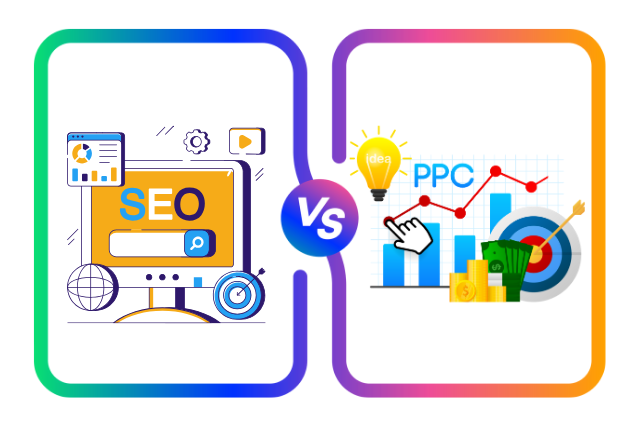
SEO vs PPC: A Human Perspective
Imagine you own a bakery. SEO is like baking a signature cake that becomes famous in town people hear about it, come back repeatedly, and tell friends. PPC is like putting up a flashy billboard on the busiest street it brings immediate attention, but only while the billboard is up.
| Feature | SEO | PPC |
|---|---|---|
| Cost | Lower long-term effort upfront | Immediate cost ongoing spend |
| Speed | Slow takes months | Fast almost immediate |
| Traffic Type | Organic, trust-building | Paid, highly targeted |
| Longevity | Sustainable | Temporary |
| Best Use | Building authority and long-term growth | Quick results, promotions, testing market |
Combining SEO and PPC: The Smart Approach
You don’t always have to pick one. Many successful businesses use both in tandem. Here’s a practical roadmap:
- New Businesses: Use PPC to get immediate traffic while building your SEO foundation.
- Long-Term Growth: Invest in SEO to gain sustainable traffic and brand credibility.
- Competitive Markets: Use PPC to capture high-value traffic that’s too hard to rank for organically.
- Keyword Insights: Use PPC data to find which keywords convert best, then optimize your SEO around them.
Actionable Tips for Business Owners
- Audit your current website: Ensure it’s fast, mobile-friendly, and easy to navigate.
- Research your audience: What are they searching for? What problems are they trying to solve?
- Start small with PPC: Test campaigns with a modest budget before scaling.
- Invest in high-quality content: Blogs, guides, and FAQs build trust and improve rankings.
- Monitor results: Use Google Analytics and Ads dashboards to track performance.
Conclusion
Choosing between SEO and PPC is less about “which is better” and more about your business goals, timeline, and resources. SEO builds credibility and long-term growth, while PPC delivers fast, targeted results. The most successful strategy often blends both, giving your business immediate traffic and sustainable authority.
In digital marketing, patience and strategy always pay off. Treat SEO like planting seeds and PPC like watering themthe combination ensures your business grows strong and stays visible.
FAQs
Which is better for my business: SEO or PPC?
There’s no one-size-fits-all answer. SEO is better for long-term growth and brand trust, while PPC is ideal for quick traffic and immediate leads. Most successful businesses use both together SEO for sustainability and PPC for speed.
How long does SEO take to show results?
SEO usually takes 3 to 6 months to show noticeable improvements, and sometimes longer in competitive industries. While it requires patience, the results are long-lasting and cost-effective compared to paid ads.
Is PPC expensive for small businesses?
PPC can be expensive if not managed properly, but small businesses can still benefit by:
Setting daily budget caps
With the right strategy, PPC can deliver a strong return even on a modest budget.
Targeting long-tail keywords
Limiting ads to specific locations
Can SEO and PPC work together?
Yes, and they work best when combined. PPC provides quick insights into high-converting keywords, which can guide your SEO strategy. Meanwhile, strong SEO helps reduce your reliance on paid ads over time.
Should I stop PPC once my SEO rankings improve?
Not necessarily. Many businesses reduce PPC spend once SEO gains traction, but keeping ads for high-value or competitive keywords can maximize visibility and conversions. The goal is balance, not replacement.