As Google Search continues to evolve, many users still come across the phrase “Add Me to Search” and wonder what it means, whether it still works, and how they can make themselves visible on Google today.
This feature once allowed individuals to present themselves directly in Google Search results. However, by 2026, it has been fully discontinued. This guide explains the feature in detail, its purpose, its removal, and how personal visibility on Google works today.

What Was “Add Me to Search” on Google?
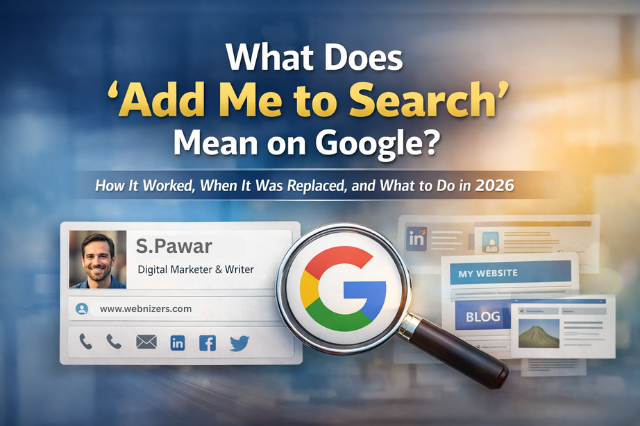
“Add Me to Search” was a Google Search feature that allowed individuals to create a personal profile, known as a Google People Card. This profile appeared directly in Google Search results when someone searched for that individual’s name.
The goal of this feature was to help people without personal websites establish an online identity. It allowed Google users to quickly understand who a person was, what they did, and how to find them online.
Unlike business listings, People Cards were designed for individuals, not companies or brands. They focused on personal branding rather than commercial promotion.
What Is a Google People Card?
A Google People Card was the actual profile created using the “Add Me to Search” option. It functioned as a mini profile page within Google Search.
People Cards helped reduce confusion when multiple people shared the same name. By displaying verified information, they helped searchers identify the correct individual quickly.
These cards were primarily visible on mobile devices and were tightly integrated into Google’s knowledge system.
What Information Appeared on a People Card?
Google People Cards allowed users to share structured personal and professional information, including:
- Full legal or professional name
- Profile image for visual identification
- Short bio describing background or expertise
- Profession, job role, or skill set
- Geographic location such as city or country
- Website or portfolio link
- Social media profiles
- Optional contact information
This information helped Google understand the individual as an entity and present relevant details directly in search results.
How Did “Add Me to Search” Work?
Creating a People Card was a guided and user-friendly process.
A user had to sign in to their Google account and search for “Add me to Search.” Google then prompted them to create a People Card by entering personal and professional details.
Once submitted, Google reviewed the card for accuracy and policy compliance. Approved cards became visible in search results, while rejected cards could be edited and resubmitted.
Users could update or remove their cards at any time while the feature was active.
When Was “Add Me to Search” Replaced?
Google officially began phasing out the “Add Me to Search” feature in April 2024.
From that point:
- New People Cards could no longer be created
- Editing options were gradually disabled
- Existing People Cards were removed from search results
By May 2024, the feature was fully discontinued. In 2026, it remains completely unavailable, with no option to recreate or restore People Cards.
Why Did Google Remove “Add Me to Search”?
The removal of “Add Me to Search” was part of Google’s broader strategy to improve search quality and trust.
One major challenge was data reliability. Personal information frequently changed, making it difficult for Google to ensure accuracy.
Another factor was limited global adoption. The feature was not consistently used across all regions.
Additionally, Google’s ranking systems shifted toward authority-based content, prioritizing websites and verified platforms over short personal profiles.
The rise of AI-driven search experiences also reduced the need for lightweight personal cards.
What Replaced “Add Me to Search” in 2026?
Google did not introduce a direct replacement feature. Instead, it transitioned to a more comprehensive personal identity system based on authority, content depth, and trust.
Personal Websites as the Primary Alternative
Personal websites are now the strongest way to establish online identity.
Google prefers websites that include:
- Detailed About pages
- Clear author and ownership information
- Structured content and metadata
- Regularly updated content
A personal website gives full control over how information is presented and updated.
Professional Platforms as Identity Signals
Profiles on professional platforms such as LinkedIn act as strong identity references. These profiles often rank high in name-based searches and provide structured, verified information.
Author Authority and Trust Signals
Google evaluates individuals using experience, expertise, authoritativeness, and trustworthiness.
Publishing articles, blogs, and thought leadership content under a real name helps Google associate credibility with an individual.
Entity-Based Search Understanding
Instead of relying on People Cards, Google now builds identity by recognizing people as entities based on consistent mentions, content associations, and structured data across the web.
How Can You Add Yourself to Google Search in 2026?
Although “Add Me to Search” no longer exists, individuals can still achieve strong visibility on Google.
Build a Personal Website
Include a professional bio, portfolio or services, contact information, and consistent branding across all pages.
Optimize Professional Profiles
Ensure profiles on platforms like LinkedIn are complete, accurate, and aligned with your personal website.
Publish High-Quality Content
Create blogs, articles, or guest posts that demonstrate expertise and use your real name as the author
Maintain Consistent Information
Use the same name, photo, and professional details across platforms to help Google recognize you as a single entity.
Who Benefited Most from “Add Me to Search”?
The feature was widely used by freelancers, consultants, entrepreneurs, job seekers, influencers, and professionals seeking personal visibility without technical complexity.
Today, these users benefit more from long-term personal branding strategies.Is “Add Me to Search” Coming Back?
As of 2026, there are no signs that Google plans to bring back the “Add Me to Search” feature.
Google’s focus is now on deeper content evaluation, verified identities, and trust-based ranking systems.
Conclusion
“Add Me to Search” was an important step in personal visibility on Google, but its removal reflects how search has matured.
In 2026, Google rewards individuals who build credible digital identities through content, consistency, and authority rather than relying on short profile features.
Creating a strong personal presence online is now the most reliable way to appear in Google Search.
FAQs
What does “Add Me to Search” mean on Google?
Add Me to Search” was a Google feature that allowed individuals to create a public profile called a Google People Card. This profile displayed your name, photo, bio, and links directly in search results to make it easier for people to find you.
Is “Add Me to Search” still available in 2026?
No. Google officially discontinued “Add Me to Search” in April 2024, and all existing People Cards were removed by May 2024. The feature is fully retired and cannot be created or restored.
Who could use “Add Me to Search”?
The feature was popular among freelancers, consultants, entrepreneurs, job seekers, influencers, and professionals who wanted online visibility without building a website.
Why did Google remove “Add Me to Search”?
Google removed the feature because of limited adoption, challenges in keeping personal data accurate, and a shift toward authority-based search results. Google now focuses on websites, verified profiles, and AI-driven content evaluation.
How can I make myself visible on Google Search in 2026?
You can improve your visibility by:
Maintaining consistent name, photo, and bio across platforms
Creating a personal website with an About page and portfolio
Optimizing LinkedIn and other professional profiles
Publishing blogs, articles, or guest posts under your real name